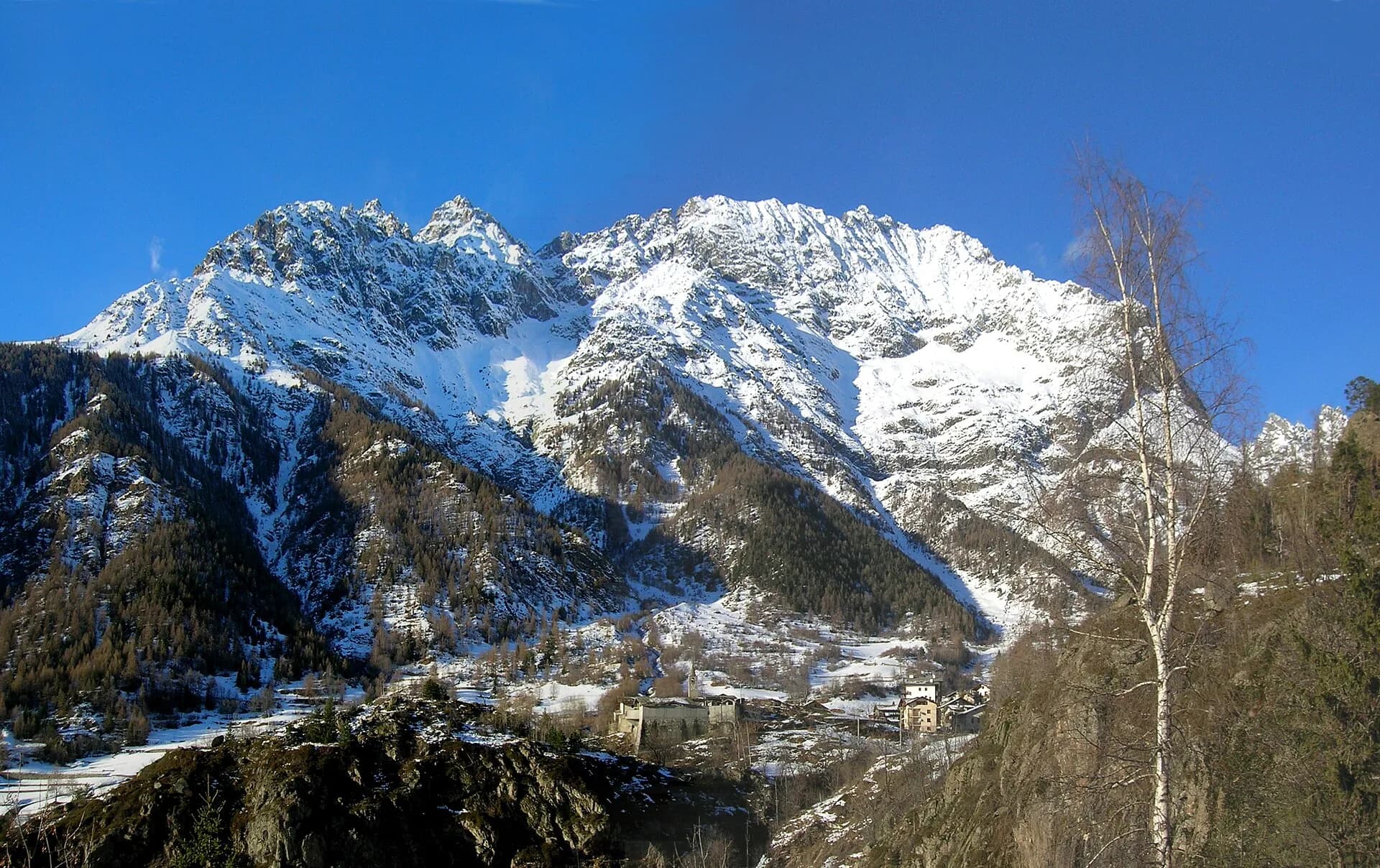
The Valdostan Pennine Alps include giants such as Dent d'Hérens (4,174 m) and Mont Vélan (3,734 m), visible from Valtournenche and Valpelline. These summits mark the border with Switzerland and dominate landscapes of hanging glaciers, limestone faces and deep valleys. Alta Via 1 crosses this sector between Cuney, Fenêtre de Tsan and passes toward Valpelline.
En bref
- Dent d'Hérens facing Valtournenche
- Mont Vélan and the Valpelline–Valais border
- Ophiolites and Penninic geology
Vue 3D du massif
Carte interactive avec relief MapTiler. Tournez et inclinez pour explorer la morphologie du massif.
Géologie
Dolomitic limestone, Penninic marbles and ophiolites characterise slopes with strong altitudinal gradient. Hanging glaciers of Vélan and Dent d'Hérens are sensitive indicators of climate change. Contacts between crystalline basement and sedimentary cover are visible along Alta Via 1 passes.
Histoire et culture alpine
Dent d'Hérens was among the last great summits of the Western Alps to be climbed (1863). Mont Vélan marked for centuries the ducal border between Savoy and Aosta Valley. Historic huts such as Oratorio di Cuney testify to devotion and alpine transhumance.
Sentiers et itinéraires
Alta Via 1 crosses Fenêtre de Tsan, Col Terray and Colle di Valcournera in sections graded EE. Rifugio Oratorio di Cuney is an iconic stage. Exceptional views of Matterhorn, Monte Rosa and Grand Combin on clear days.
Tous les sommets
Dent d'Hérens
4177m
A quiet giant facing Valtournenche, often confused with the Matterhorn from the valley floor. Limestone-dolomite rocks and hanging glaciers on the north flank.
Mont Vélan
3734m
Border peak between Valpelline and Valais, cited on Alta Via 1 stages. Velan Glacier and Zermatt-Saas ophiolites in the subsurface.
Galerie des sommets