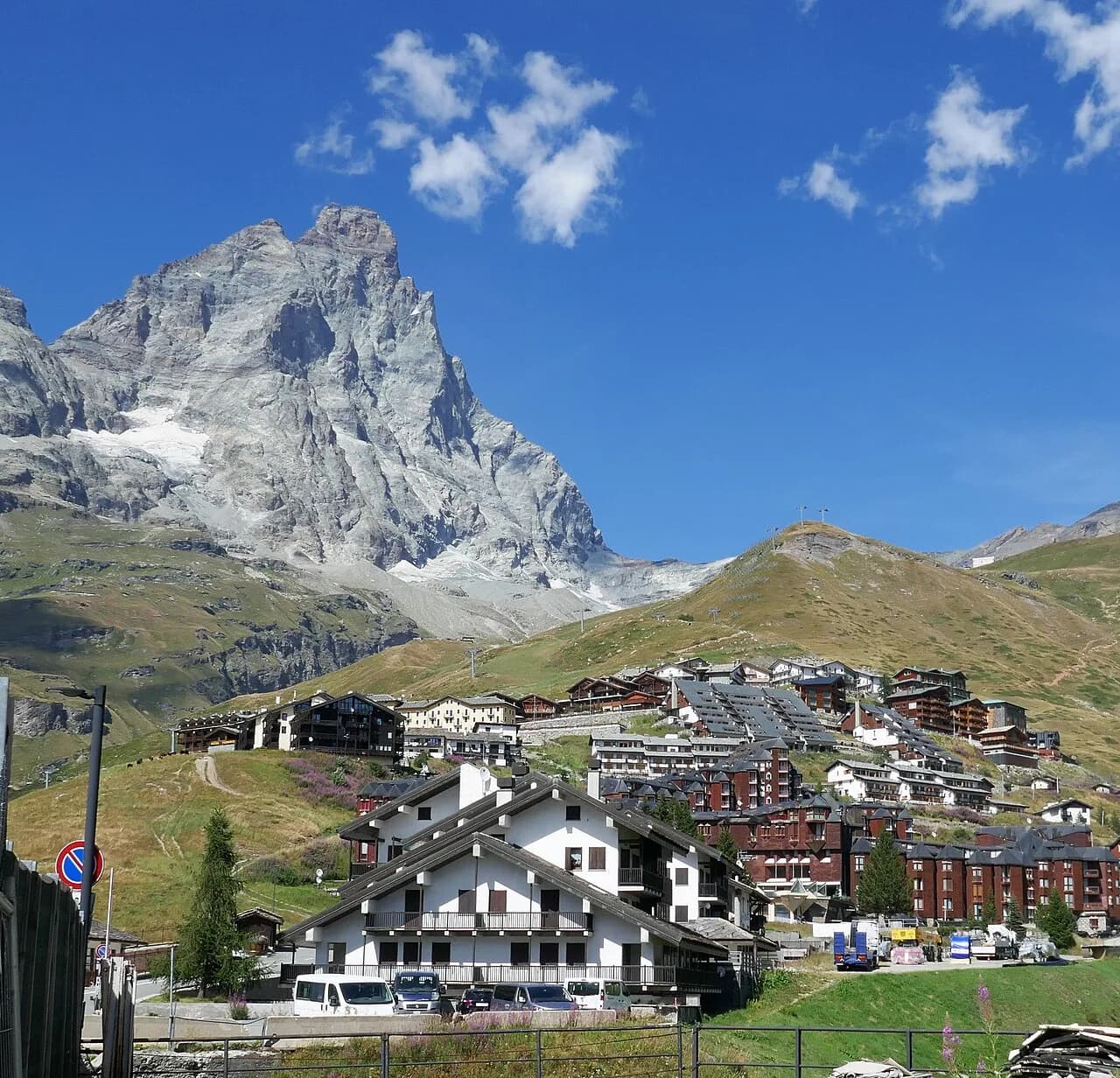
The Matterhorn (4,478 m) is the pyramid symbol of the Alps, recognisable from most of Valtournenche and Alta Via 1 ridges. Its unique shape derives from differential erosion of Penninic sedimentary rocks. Breuil-Cervinia and Valtournenche are historic centres of mountaineering and mountain tourism; the Theodul Pass (3,301 m) has linked the two valleys for centuries and marks the border with Switzerland.
En bref
- Iconic pyramid visible throughout the valley
- Matterhorn Tour and Theodul Pass
- South faces and Plateau Rosa
Vue 3D du massif
Carte interactive avec relief MapTiler. Tournez et inclinez pour explorer la morphologie du massif.
Géologie
The Matterhorn consists mainly of Penninic calcareous schists and dolomites, uplifted and folded during Alpine orogeny. North and south faces show inclined bedding explaining the pyramidal shape. Plateau Rosa above Breuil is a perennial glacier on metamorphic basement. Ophiolites and limestones outcrop in lateral valleys toward Valpelline and Gressoney.
Histoire et culture alpine
The first Matterhorn ascent in 1865 — Whymper's tragic expedition — marked the global mountaineering imagination. Valtournenche preserves traditional architecture and pastures tied to transhumance. The Theodul Pass was for centuries a trade route between Aosta Valley and Valais. Cervinia, developed in the 20th century, is today a winter and summer resort with strong mountain identity.
Sentiers et itinéraires
The Matterhorn Tour links Valtournenche, Breuil-Cervinia and the Swiss Valais in a high-altitude loop. Alta Via 1 crosses the massif from east to west via Colle di Nana, Fenêtre de Tsan and Colle di Valcournera. Classic hikes reach Rifugio Barmasse, Plateau Rosa and the Cignana lakes. Many sections require secure footing on rock and snow.
Tous les sommets
Matterhorn
4478m
The pyramid symbol of the Alps, visible from most of Valtournenche and the Matterhorn Tour. Penninic sedimentary rocks and north–south faces between Italy and Switzerland.