Bivouac · 4322 m
Refuge Vallot
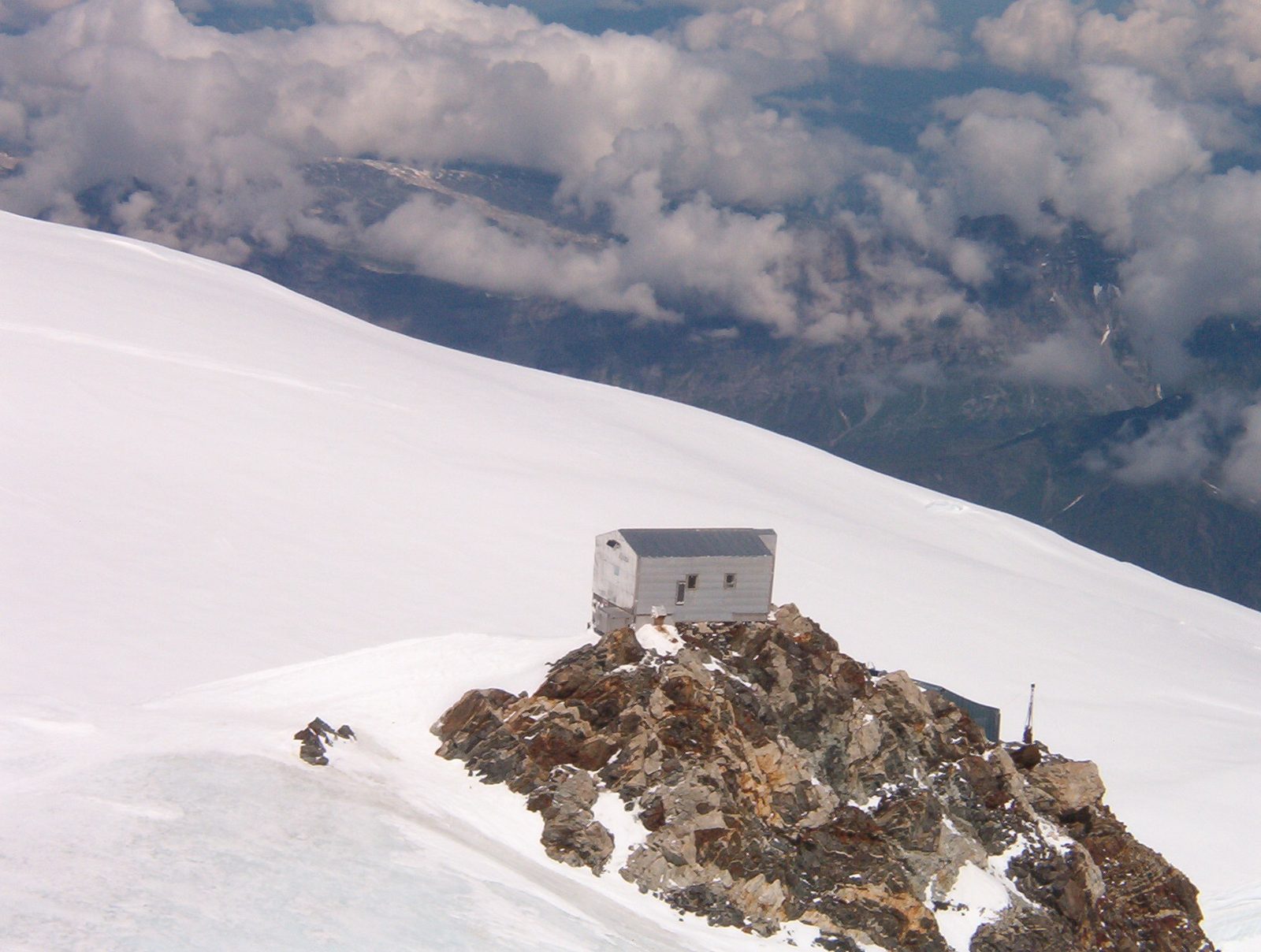
At 4,362 metres on the French normal route up Mont Blanc, the Vallot hut is an emergency-only shelter: not a planned stop but a metal refuge that has saved countless climbers caught by storms on the final arête. Off-limits as a scheduled overnight, it remains one of the highest shelters in the Alps.
Altitude
4322 m
Valley
Val Veny
Beds
12
History
Built in 1890 on the initiative of the scientist Joseph Vallot, who installed a high-altitude observatory there, and enlarged in 1938, it bears its founder's name. For over a century it has been the last shelter before the summit on the Goûter route.
Contact & booking
Official manager details — always check opening dates and rates on the website before you go.
Where it is
45.8391, 6.8522 · 4322 m
What to bring
Everything you need to be self-sufficient: sleeping bag and mat (often absent or minimal), food and water or a small stove, layered and windproof clothing, a headlamp, a first-aid kit. No money is needed — the bivouac is free. Carry out all your waste.
What to do there
If you stay overnight, enjoy the silence and the starry sky far from any light. The reward for climbing this high is dawn from altitude: wake early, while the air is still clear, and watch it set the ridges alight. Which summits and passes you can reach depends on the area — check the routes on the trail pages above.
What is a bivouac
A bivouac is a small unmanned shelter, always open and free, placed at high altitude where a staffed hut could not exist. It was conceived to break up long traverses, to wait for first light before a climb, or as an emergency shelter in bad weather. There is no keeper and no services: you find what those before you have left. Hence the golden rule — leave it as clean and tidy as you would wish to find it.
Nearby peaks
Community gallery
Photos are published immediately. JPG/PNG/WebP, max 6 MB.
Source: OpenStreetMap contributors
Refuge Vallot