Valle di Chamonix — Aiguilles Rouges
Tour du Mont Blanc — Stage 8: Tré-le-Champ → La Flégère
Advertencias
- Exposed equipped sections: surefootedness and a head for heights required
- Book overnight stops in peak season
6.1 km
+691 m
−303 m
4 h
Nivel físico
Mapa y ruta
Traza GPX — verifica sobre el terreno antes de caminar
Descripción
Puntos clave
Salida
Tré-le-Champ · 1398 m
Llegada
La Flégère · 1883 m
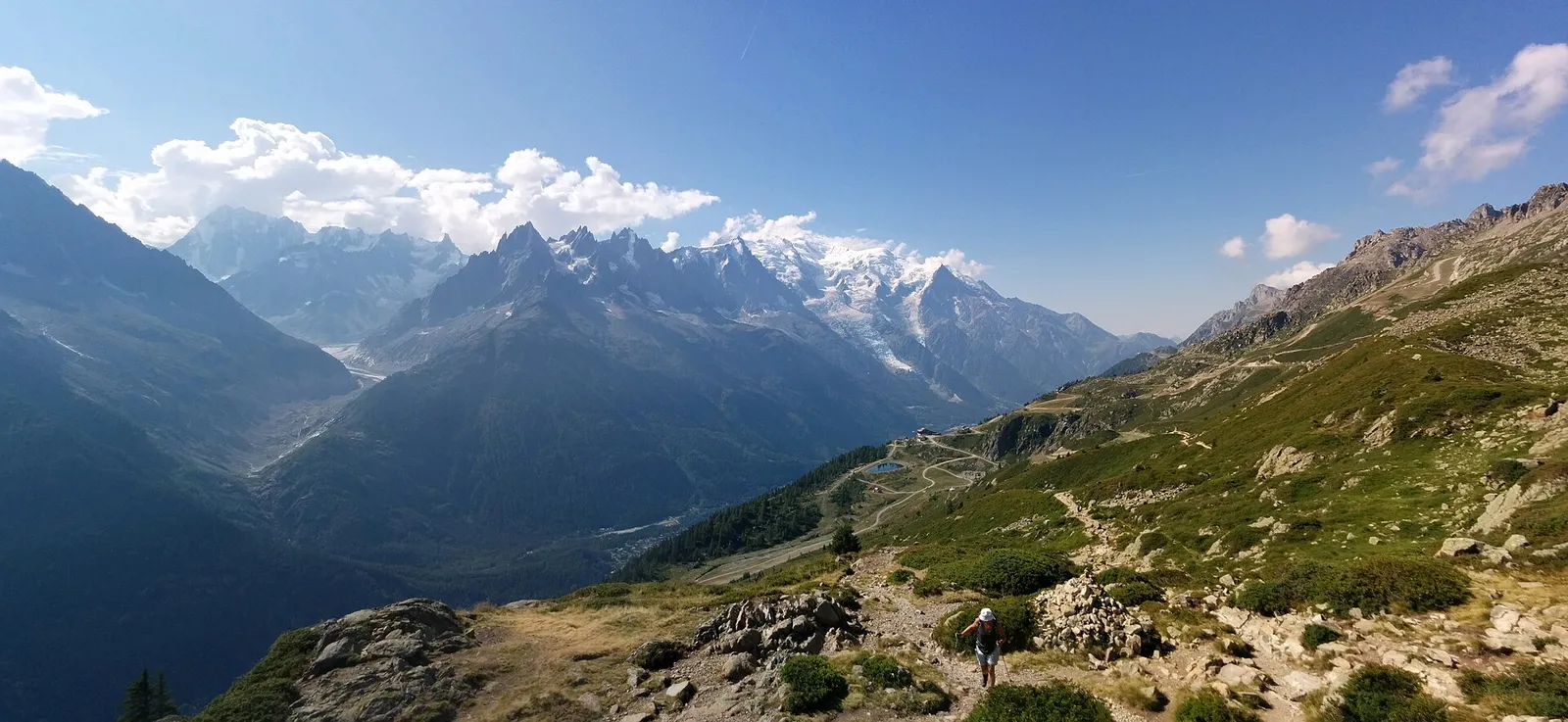
A short but technical stage: past the Aiguillette d’Argentière junction the trail climbs the famous iron ladders of the Aiguilles Rouges nature reserve, then follows the Grand Balcon Sud to La Flégère (1,877 m), facing the Mer de Glace and the Chamonix Aiguilles.
Short on paper but not to be underestimated: the Aiguillette d’Argentière passage climbs a succession of iron ladders, walkways and rungs fixed into the rock — spectacular and solid, but best avoided in the wet or with storms brewing. You then enter the Aiguilles Rouges nature reserve, home of ibex and marmots, and follow the Grand Balcon Sud, with the Mer de Glace, the Drus and the Chamonix Aiguilles parading opposite the whole way. Those wary of ladders can detour via the Col des Montets, adding an hour and a half.
Ciencias de la Tierra
Geología y paisaje
The Mont Blanc massif is a Hercynian granite batholith (~300 million years old) uplifted by the Alpine orogeny: the pale Mont Blanc granite — the “protogine” — forms the Peuterey and Géant spires. At its feet the tour walks on older crystalline basement rocks (gneiss and micaschist) and, in Val Veny, on the Mesozoic limestones of the Pyramides Calcaires, a sliver of sedimentary cover pinched between the granites. The Miage and Brenva moraines are textbook examples.
Historia y cultura
The Aiguilles Rouges nature reserve, created in 1974, protects 3,300 hectares between 1,200 and 2,965 metres: its equipped trails were among the first in the Alps designed for environmental education.
Fuentes de agua
Water at the stage's support points (Tré-le-Champ, La Flégère). On the high ground and at the passes springs are not guaranteed: fill bottles in the valley and at the huts.
Cómo llegar
Cross-border stage: on the foreign sides local public transport applies (PostAuto in Switzerland, line buses in France/Piedmont). Check seasonal timetables; in peak season several access links run by reservation only.
Aparcamiento
Galería de fotos
Photos are published immediately. JPG/PNG/WebP, max 6 MB.
Etapas contiguas
AEditado y verificado por Andrea Rama
Fuente de datos: Tour du Mont Blanc — itinerario internazionale segnalato · Traccia calcolata su rete sentieri OpenStreetMap (ODbL); verificare sul terreno
Última verificación:
Valle di Chamonix — Aiguilles Rouges
Senderos relacionados
Mismo valle o rutas similares — más excursiones por descubrir.
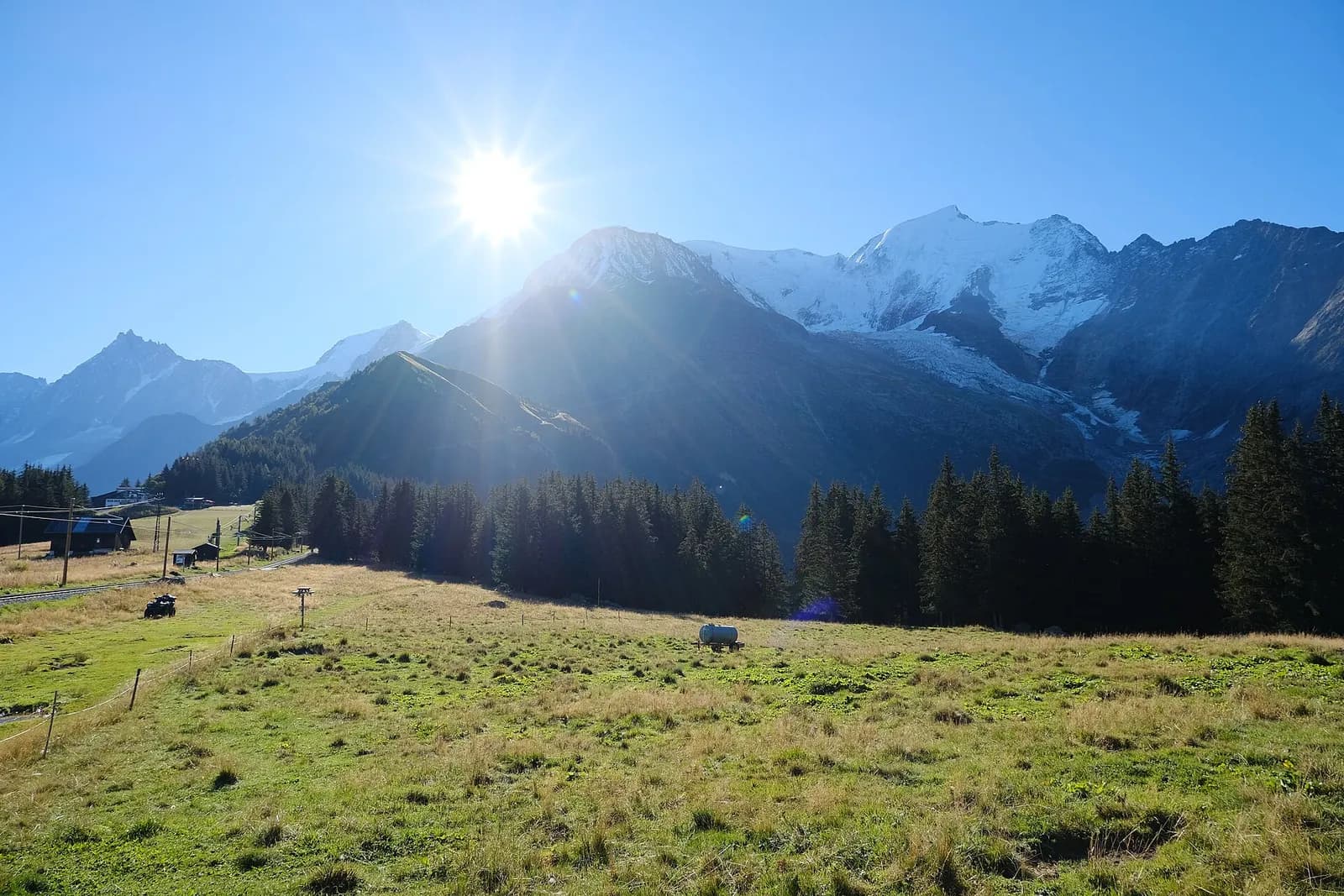
Valle di Chamonix — Val Montjoie
Tour du Mont Blanc — Stage 10: Les Houches → Les Contamines-Montjoie
The Col de Voza and the gentle Val Montjoie.
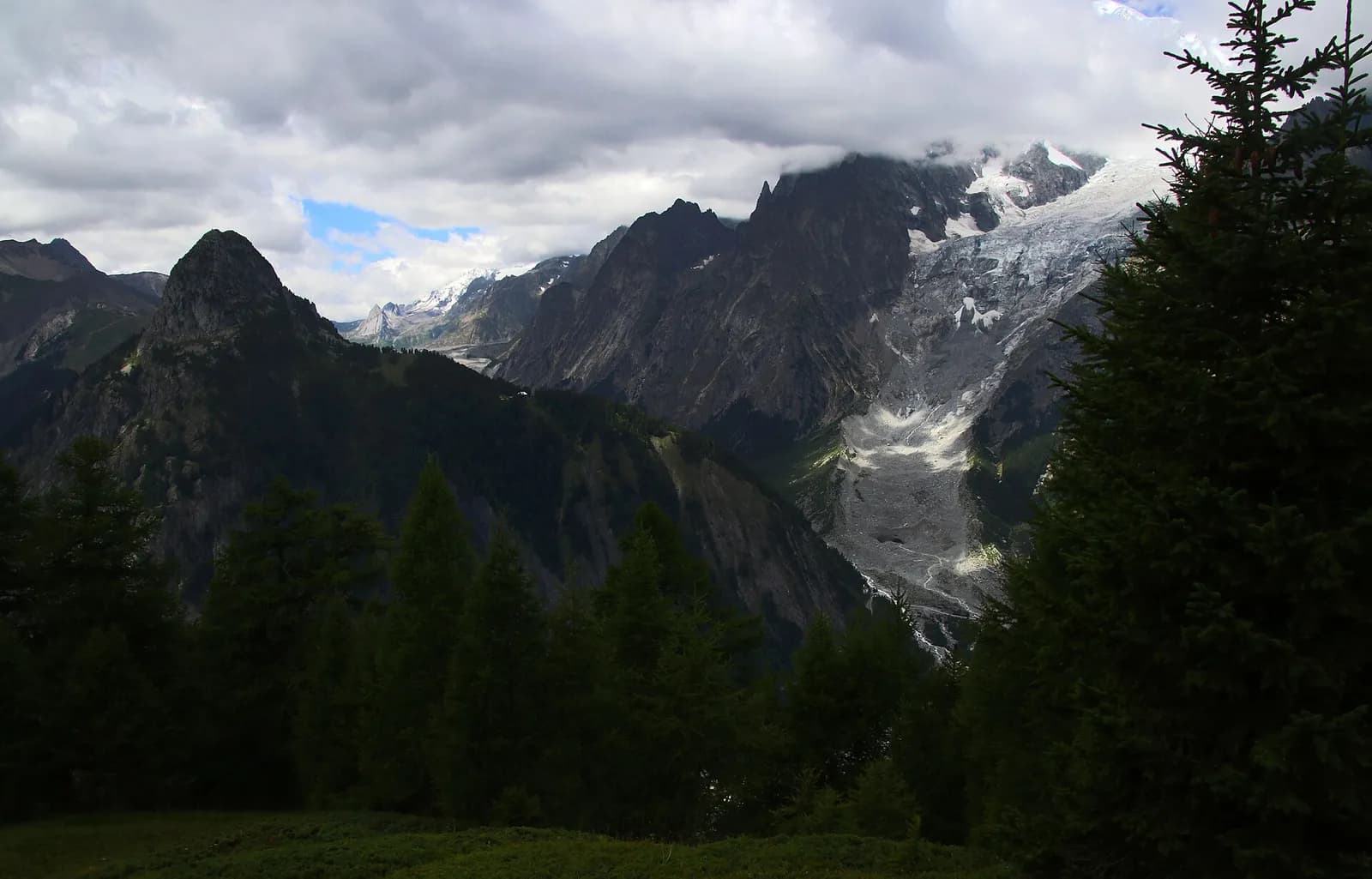
Val Ferret
Tour du Mont Blanc — Stage 1: Courmayeur → Rifugio Giorgio Bertone
A steady climb from Courmayeur to the Rifugio Bertone balcony.
Val Montjoie — Vallée des Glaciers
Tour du Mont Blanc — Stage 11: Les Contamines-Montjoie → Les Chapieux
The great Bonhomme crossing, the wild heart of the French TMB.
Vallée des Glaciers — Val Veny
Tour du Mont Blanc — Stage 12: Les Chapieux → Rifugio Elisabetta Soldini
The Col de la Seigne: back into Italy, into the great Mont Blanc amphitheatre.