Trail guide
Best easy family hikes in Aosta Valley
T and E hikes suitable for children in Aosta Valley — moderate elevation, lakes, castles and Gran Paradiso valleys.
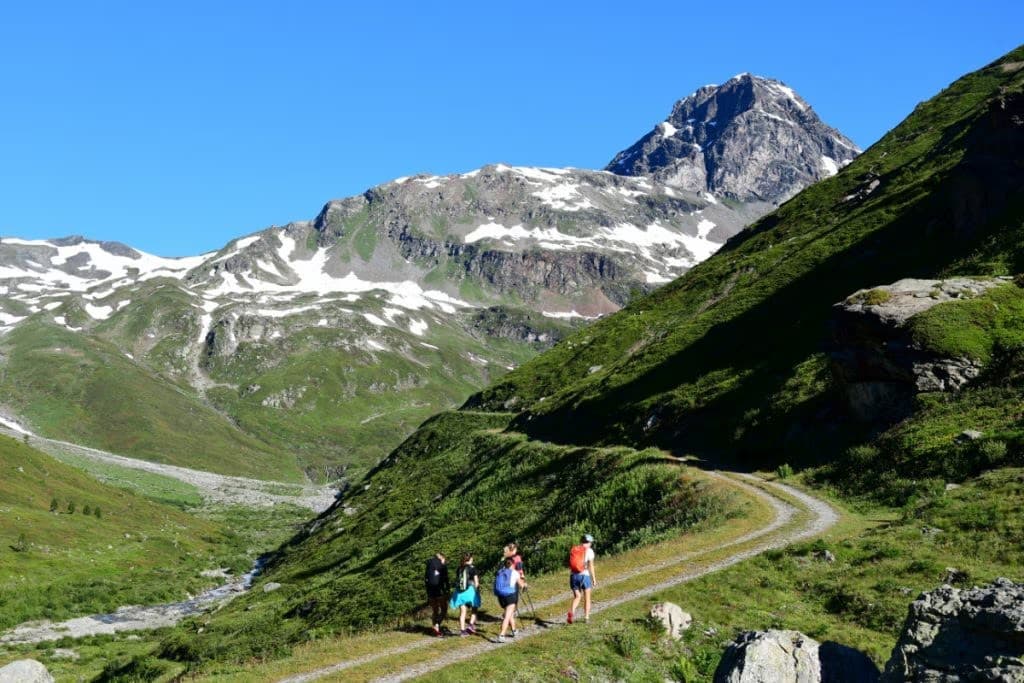
Taking children into the mountains in Aosta Valley doesn't mean giving up the scenery. On the contrary: for many parents, watching a six-year-old see an ibex or a marmot for the first time is the most intense moment of a week of trekking. The region offers dozens of T (tourist) and E (hiking) trails with welcoming huts, lakes as a tangible destination and elevation gains manageable in half a day — provided you adapt expectations, pace and goal to the smallest member of the group, not the fittest.
This guide gathers five routes from the Sentieri VdA catalogue, distinct from the "top ten" and "spectacular lakes" rankings already published on the site. They aren't "easy" in the sense of flat: they are easy for families — well marked, with the option to shorten, without exposed passages or technical equipment. Each trail includes practical advice we've checked with hiking parents and against the official CAI grades.
Golden rule: better to arrive happy at seventy percent of the route than exhausted at one hundred. The mountain will still be there; children will remember the atmosphere, not the kilometres.
Why Aosta Valley works with children
The region has a tradition of family tourism that goes back to the Gran Paradiso — Italy's first national park, created partly to protect the wildlife that children can observe today — and to valleys like Cogne, Champorcher and Ayas, where schools have organised excursions for generations. The huts welcome families, many trails have return variants, and the valleys offer a "plan B" in case of bad weather: a museum, a castle, a piece of artisan chocolate. The mountain here isn't only a challenge: it's also education, play, discovery.
The secret, told by Aosta Valley hiking parents, is simple: reduce the goal and increase the experience. A child who finds a fossil in a moraine, who learns to tell a larch from a Swiss pine, who hears a marmot's call won't forget the trail — even if they didn't reach the lake at the top. The five routes below have been chosen partly for what happens during the climb, not only for the destination.
1. Donnas–Perloz — the gateway to the Alta Via 1
The first stage of the AV1, Donnas–Perloz is a gentle introduction to the great alpine traverses: a trail well marked by the CAI, crossing terraced vineyards, with views over the Dora Baltea and the Piedmont Prealps. Donnas, at the gates of Aosta Valley, preserves a historic centre with medieval arcades; the climb towards Perloz gradually introduces the child to the concept of a "stage" without imposing excessive altitudes.
The difficulty is E, but the elevation gain is spread over a full day and the route allows frequent breaks. Ideal for children from 6–7 years used to walking on dirt trails — not urban asphalt. Bring snacks at regular intervals: the "a meal every hour" rule works better than a single lunch midway.
Why start with the Alta Via 1? Because children love "big" concepts: saying "we're doing the Alta Via" creates excitement even on a relatively short stretch. Perloz, as a destination or intermediate stage, offers the option to return towards Donnas or continue for families already in their stride. Check the weather: the south-facing stretch can be hot in July — hat, sunscreen, plenty of water.
2. Cogne–Valnontey — in the heart of the park
The first stage of the Tour du Gran Paradiso, Cogne–Valnontey follows the floor of the national park's valley, with the option to stop before the Valnontey nature playground, visit the visitor centre or simply watch marmots and red squirrels along the trail. Cogne is one of the capitals of Italian family hiking: infrastructure, restaurants, hotels that welcome children, Walser culture accessible even to the youngest.
The difficulty is T/E, with minimal elevation gain if you only walk the flat stretch towards Valnontey. It's the perfect destination for a slow day: set off late, picnic by the river, return in the afternoon without guilt. The stream, the meadows, the larch woods create a "reassuring" environment for children who have never walked in the mountains.
Valnontey is also a base for more demanding trails — Lago Djouan, Loie — to keep in mind for when the children grow up. Today, Cogne–Valnontey teaches that the mountain can be home, not just a challenge. Bring binoculars: ibex and chamois are common; teach children to observe in silence, without running towards the animal.
3. Champoluc–Lac Perrin — an accessible Ayas lake
From Champoluc, the heart of Val d'Ayas, Champoluc–Lac Perrin leads to a mid-mountain lake with limited elevation gain and a clear goal: the water, the meadow, the picnic. It's a classic destination for Ayas school excursions — a sign that teachers and guides consider it suitable for children. The lake isn't as spectacular as the Rutor, but for an eight-year-old "reaching the lake" is goal enough.
The difficulty is E, with a gradual climb through woods and then meadows. Champoluc offers services, equipment rental, the option of an early return if the weather turns. The advice: turn the climb into a game — count types of flowers, look for marmots, make up stories about the huts visible in the distance. The lake destination works psychologically: children walk "towards" something tangible.
Val d'Ayas has a Walser tradition and family tourism less crowded than Courmayeur. After the hike, an ice cream in Champoluc or a visit to the village of Antagnod — among the Borghi più Belli d'Italia — closes the day with zero stress. Avoid mid-August if possible: prefer June or September.
4. Nabian–Lago Villa — water and history
The Nabian–Lago Villa trail combines woods and lake in the Champorcher valley, one of the quietest side valleys in the region. Lago Villa lies in a wooded basin, reachable with a moderate elevation gain; the route crosses a landscape of chestnut woods and then alpine meadows. Difficulty E, suitable for children used to walking two or three hours with breaks.
The Champorcher valley offers a "culture" bonus: the castle of Ville, the hamlets of Champorcher and Chardonney, the Romanesque churches. Combine it with a visit to the castle for a "nature + history" afternoon that satisfies parents and grandparents. Children often prefer "the lake with the castle" to any peak above three thousand metres.
Set off from Nabian with water and a snack: there are no huts on the short stretch to the lake. In autumn, the chestnut trees colour the trail; in summer, the flowering meadows attract butterflies and dragonflies — material for nature games without schoolbooks. Respect the wildlife: no swimming in alpine lakes, no throwing stones.
5. Perloz–Rifugio Coda — a taste of the AV1
If the children can manage a few more hours and you've already walked Donnas–Perloz, stage 2 of the AV1, Perloz–Coda offers alpine meadows, grazing livestock and the appeal of the hut as a reward. Reaching the Rifugio Coda — polenta, hot chocolate, a view of Mont Blanc in the distance — creates a memory that children will associate with the mountain for years.
The difficulty is E, with a more sustained elevation gain than the previous stages. Recommended for families with children over 8–9 years already in their stride, or with the option of an early return from Perloz without reaching the hut. Book lunch at the Coda if you want to avoid a packed lunch: the huts are used to families, but places in July are limited.
Why close with a "more demanding" stage? Because many families underestimate children: with a slow pace, breaks and a clear goal, the little hikers often exceed expectations. Perloz–Coda is the bridge between "easy" and "great trekking" — without moving up to EE. If you're not ready, stop at the intermediate meadow and turn back: no shame, just common sense.
Parents' checklist
Before setting off, check that you have:
- Boots for trekking with a Vibram sole or equivalent — not urban sneakers on wet dirt trails
- Thermal layers even in July: it's cool at altitude, hot in the sun
- Calorie-rich snacks + plenty of water (rule: half a litre every two hours per child)
- Sunscreen SPF 50, hat, sunglasses
- Basic kit: plasters, antihistamine, saline solution
- A plan B if the weather turns: a valley always walkable, a hut or visitor centre as shelter
"Zero stress" weekend itinerary
Saturday: Cogne–Valnontey in the morning, lunch in Cogne, a free afternoon (swimming pool, visitor centre, ice cream). Sunday: Lac Perrin from Champoluc or Lago Villa from Nabian — depending on the children's age. Two days, two valleys, limited elevation gains, zero EE stages. Stay overnight in the valley, not in a hut: the first mountain weekend with small children works better with a hot shower and a wide bed.
When to avoid
Mid-August in Val Ferret and Courmayeur: full car parks, crowded trails, children tired before they start. Prefer Champorcher, Valnontey, Ayas. Consult the warnings for weather and minimum equipment. Don't push it with storms on the way: children don't have the same tolerance for discomfort as adults.
Why walk as a family
Aosta Valley's mountains aren't an amusement park: they're a real environment, with changing weather, trails that tire and panoramas that pay you back. Bringing children here means teaching patience, respect for nature, the ability to adapt. There's no need to reach the summit: there's a need to come home wanting to set off again.
Many parents ask us when to start. There's no universal age: there's the child who at five walks three hours happily and the one who at ten tires after an hour. Watch the signals — boredom, tears, sudden silence — and turn back without drama. Aosta Valley will wait for you next year, when the legs are longer and the curiosity greater.
| Trail | Recommended age | Approx. duration |
|---|---|---|
| Donnas–Perloz | 6+ | 4–5 h |
| Cogne–Valnontey | 4+ | 2–4 h |
| Champoluc–Lac Perrin | 7+ | 3–4 h |
| Nabian–Lago Villa | 6+ | 3 h |
| Perloz–Coda | 8+ | 5–6 h |
Photo credits
Cover: Pexels — Family hiking on an alpine trail, Aosta Valley. Image at /articoli/famiglia-trekking.jpg.