Trail guide
Best photography hikes in Aosta Valley
Photography hike guide in Aosta Valley — Matterhorn, Monte Rosa, Arpy, Miage and AV ridges.
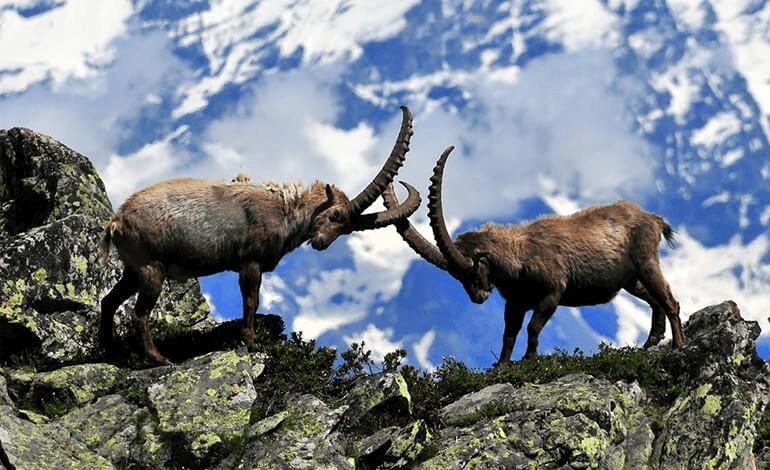
The Aosta Valley is a natural set for landscape photography: vertical walls that cut the sky, mirror-like lakes that double the peaks, valley mist that opens in layers to reveal four thousand metres of rock and ice. But photographing in the mountains isn't about replicating postcards — it's about understanding light, time and composition within the context of a trek that takes priority over the frame. This guide gathers the itineraries from the Sentieri VdA catalogue best suited to photographers (not influencers in a rush): routes where stopping makes sense, where waiting pays off, where the landscape offers lines and symmetries that can't be invented in post-production.
The mountain photographer's rule: the trek comes before the lens. Never leave the trail for a risky shot.
Matterhorn: the pyramid and afternoon light
The Matterhorn needs no introduction — but it does need angles. The east face, the one the Tour del Cervino crosses, is shaped by afternoon light: shadows that define the buttresses, snow that turns into texture, rock that shifts from grey to pink in the golden hour. Stage 2 of the Tour Cervino, Duca degli Abruzzi–Oriondé offers eight kilometres of E difficulty between two iconic refuges, with frontal perspectives on the pyramid that made the fortune of generations of photographers — from Vittorio Sella to contemporary professionals.
A 70–200 mm telephoto lens lets you isolate details of the face without compressing the perspective too much; a 16–35 mm wide-angle captures the dizzying scale of the Matterhorn within the context of the glacier. The goal isn't to «take the photo everyone has already seen»: it's to find your own, while respecting the rhythm of the trek and the alpine weather.
Monte Rosa: glaciers, ridges and alpenglow
The Tour del Monte Rosa crosses glacial environments where diagonal lines — ridges, moraines, distant seracs — build natural compositions. Stage 2, Gabiet–Colle del Teodulo is an EE day of fourteen kilometres: not for beginners, but for those seeking dawn at the Colle Teodulo with the four-thousanders of the Rosa lit by alpenglow. The Rifugio Gabiet, with the Lago Gabiet at its feet, is already a photographic set before you even start climbing.
Stage 4, Breuil-Cervinia–Gressoney-Saint-Jean closes the loop with eighteen kilometres and views over the Valtellina side of Monte Rosa — wide panoramas that include the Matterhorn and the peaks of the Lys. Difficulty E, a full day: bring extra batteries; the cold at altitude drains lithium cells faster than you'd think.
Alta Via 1: Walser diagonals and morning light
Between Gressoney and Valtournenche, the Alta Via 1 crosses Walser landscapes where the valleys draw perfect «V» shapes and the secondary peaks frame Monte Rosa. Stage 8, Grand Tournalin–Valtournenche descends from the namesake refuge over eight and a half kilometres of E difficulty: a negative elevation change that lets you shoot with the sun behind you if you set off early.
Stage 9, Valtournenche–Barmasse is shorter — less than five kilometres — but climbed with the sun behind you if you leave Valtournenche at dawn: long shadows over the pastures, marmots emerging from their burrows, raking light that models every undulation of the terrain. For photographers who love the «slow landscape», these stages are a chapter of their own.
Lac d'Arpy: symmetry and reflection
The Col Saint-Charles–Lac d'Arpy trail is dedicated to those who love symmetry and reflection. Three kilometres, T difficulty: accessible, but demanding in terms of patience. The Lac d'Arpy mirrors Mont Blanc when the wind drops — and in summer the wind almost always drops before nine in the morning. Arriving by that hour means finding one of the most iconic mirrors of the Western Alps still motionless, before the afternoon breeze ripples the surface.
A polarising filter helps manage reflections without crushing the skies; a lightweight carbon tripod is worth its weight for long exposures with low mist. You don't need EE to take good photos here: you need punctuality.
Miage and Lac Vert: glacial details
In Val Veny, the Plan de Lognan–Jardin du Miage (Lac Vert) trail leads to the Lac Vert in just over a kilometre — E difficulty, a modest climb. It's the perfect complement to the Lago del Miage for those who love macro and detail: mosses, alpine flowers, glaciers in the background. The composition here is intimate, not monumental: a miniature world that tells of the closeness of the Miage glacier.
Champillon–Saint-Rhémy: golden autumn
Stage 14 of the AV1, Champillon–Saint-Rhémy-en-Bosses in September offers amber-coloured larches and raking light — one of the most photogenic AV1 stages outside summer. Fourteen kilometres, E difficulty, a descent towards Saint-Rhémy that crosses woods in transformation. The alpine autumn has a quality of light different from summer: lower, warmer, more patient. Book the Champillon refuge well in advance if you want dawn and sunset over the Gran San Bernardo.
Kit, timing and a «photo tour» proposal
Recommended kit: lightweight tripod, polariser, extra batteries, layered clothing — waiting for perfect light often means stopping an hour longer than planned. Golden hour times (approximate, summer): Val Ferret and Bonatti dawn ~06:00, sunset ~20:30; Val Veny and Miage dawn ~06:15; Valpelline dawn ~06:00, sunset ~20:45; Cogne and Gran Paradiso dawn ~06:00.
A four-day photo tour could be: day 1, Arpy at dawn; day 2, Miage and Lac Vert; day 3, the Cervino Oriondé stage; day 4, AV1 stage 14 on the descent. Four photographic styles — reflection, macro, great wall, autumn — zero repetition.
Light, weather and the alpine photographer's patience
Photographing in the mountains means accepting uncertainty. A day that starts with mist can give you, by ten o'clock, a clear sky and raking light — or close in with rain by two in the afternoon. Photographers who work regularly in the Aosta Valley learn to read the local weather patterns: Foehn that opens the sky from the north, afternoon storms in Val Veny, thermal inversions in Valgrisenche that trap mist in the valley floor while the peaks stay clear.
Stage 8 of the AV1, Grand Tournalin–Valtournenche and stage 9, Valtournenche–Barmasse offer two different registers: descent with frontal light versus ascent with long shadows. You don't need both on the same day — better to choose based on your departure time and the type of image you're after.
Composition beyond the postcard
The Matterhorn has been photographed millions of times. The difference between a forgettable image and a memorable one often lies in context: a foreground detail, a cloud cutting across the peak, a human figure that restores scale. Stage 2 of the Tour Cervino lets you experiment with both approaches — wide-angle from the refuge, telephoto from the trail towards Oriondé.
On the lakes — Arpy, Lac Vert — composition follows classic rules: horizon on the upper or lower third, perfect reflection only with zero wind, polariser to manage glare without darkening the sky. The 44-s22 trail and the 22-s58 are low-cost «laboratories»: modest difficulty, high repeatability — you can come back the next day if the light doesn't cooperate.
Stories behind the lens
Vittorio Sella, born in Biella in 1859, carried photographic plates up to 4000 metres — imagine the weight, the chemistry, the patience. His images of Monte Rosa and the Matterhorn shaped the world's alpine imagination. Walking today on the trails he travelled with museum-piece equipment adds a layer to the photographic gesture: you don't replicate the technique, you inherit the vision — slow, respectful, attentive to light.
Four days, four visual languages
Day 1 — Reflection: dawn at Lac d'Arpy, back for breakfast in Morgex. Day 2 — Detail: Plan de Lognan–Lac Vert in the morning, free afternoon if the light fades. Day 3 — Monumental: the Cervino Duca–Oriondé stage, overnight in the refuge for sunset and dawn. Day 4 — Seasonal: AV1 Champillon–Saint-Rhémy on the descent, larches and raking light.
Monte Rosa: two stages, two registers
The Tour del Monte Rosa crosses the widest massif of the Western Alps. Stage 2 Gabiet–Teodulo is glaciological — ridges, glaciers, alpenglow — and requires EE. Stage 4 Breuil–Gressoney is more «photographic» in a panoramic sense: wide, open sky, descent towards the Val d'Ayas. Combining them across two separate days (not necessarily consecutive) offers two visual languages with no repetition.
Autumn and Champillon
Stage 14 of the AV1, Champillon–Saint-Rhémy deserves a paragraph dedicated to the season: the larches descending towards Saint-Rhémy blaze in September in amber and gold tones. The raking light of late afternoon transforms an already beautiful trail into a cinematic set. Bring warm clothing: September on the descent towards 1200 metres means cool air after sunset.
Safety before the lens
We repeat the cardinal rule: the trek comes before the photo. Don't leave the trail, don't position yourself on unstable cornices, don't ignore the weather for «just five more minutes of light». The Aosta Valley's mountains have counted too many accidents involving photographers and influencers chasing the perfect frame. Your images — even the mediocre ones — are only worth it if you come home in one piece.
Drones, refuges and regulations
Drones are forbidden or heavily regulated near refuges, national parks and protected natural areas — always check the local regulations before flying. An illegal aerial reel can cost hefty fines and reputational damage; a respectful photographic trek delivers equally powerful images from the ground.
Route summary
In short, the eight photographic trails mentioned: Cervino stage 2, Monte Rosa stage 2 and stage 4, AV1 stage 8 and stage 9, 44-s22 Arpy, 22-s58 Lac Vert, AV1 stage 14 Champillon. Eight ways of seeing the Aosta Valley — lenses, tripods, patience.
The Aosta Valley doesn't demand lenses worth thousands of euros: it asks for an eye, respect for the mountain, and the discipline to put safety before the frame. The eight routes we've described — from the Matterhorn to Arpy, from the Rosa to Champillon — are natural training grounds for learning it.
Photo credits
- Cover (Mountain photography in the Aosta Valley): Unsplash / Wikimedia Commons, free licence — Sentieri VdA archive
- Matterhorn and Tour del Monte Rosa: regional trail catalogue, Sentieri VdA reworking
- Lac d'Arpy and Mont Blanc reflections: Wikimedia Commons, CC BY-SA